ParPal · Decisions, not just scores
Your players already know what they shot.
ParPal captures the part the scorecard throws away: what the player intended before the swing, and what they thought about it right after. You see both, next to the number.
A 6 on the card could be five different problems.
- ·Bad club choice.
- ·Right club, bad swing.
- ·Right club, good swing, wrong target.
- ·An aggressive line that didn’t pay.
- ·A mental reset that never happened after the tee shot.
By the time you ask at the next practice, the player doesn’t remember, and what they tell you is a story they’ve rebuilt since.
You can’t coach a 6. You can coach the decision behind it.
You can’t walk eighteen with all of them. Ride along with one player for one round and you’ll learn more about how that kid thinks than a season of scorecards ever will. But it’s one of you, a dozen of them, and a season that’s over in ten weeks. ParPal gives you back a usable piece of that ride-along for every player, every round: a way to know which player to walk with on Thursday, and what to talk about when you do.
The whole ask is one spoken sentence.
Behind the ball, your good players already run this loop silently: the number, the wind, the club, the miss they can live with. ParPal just has them say it out loud. Tour players do it with a caddie; your sophomore has no one to say it to.
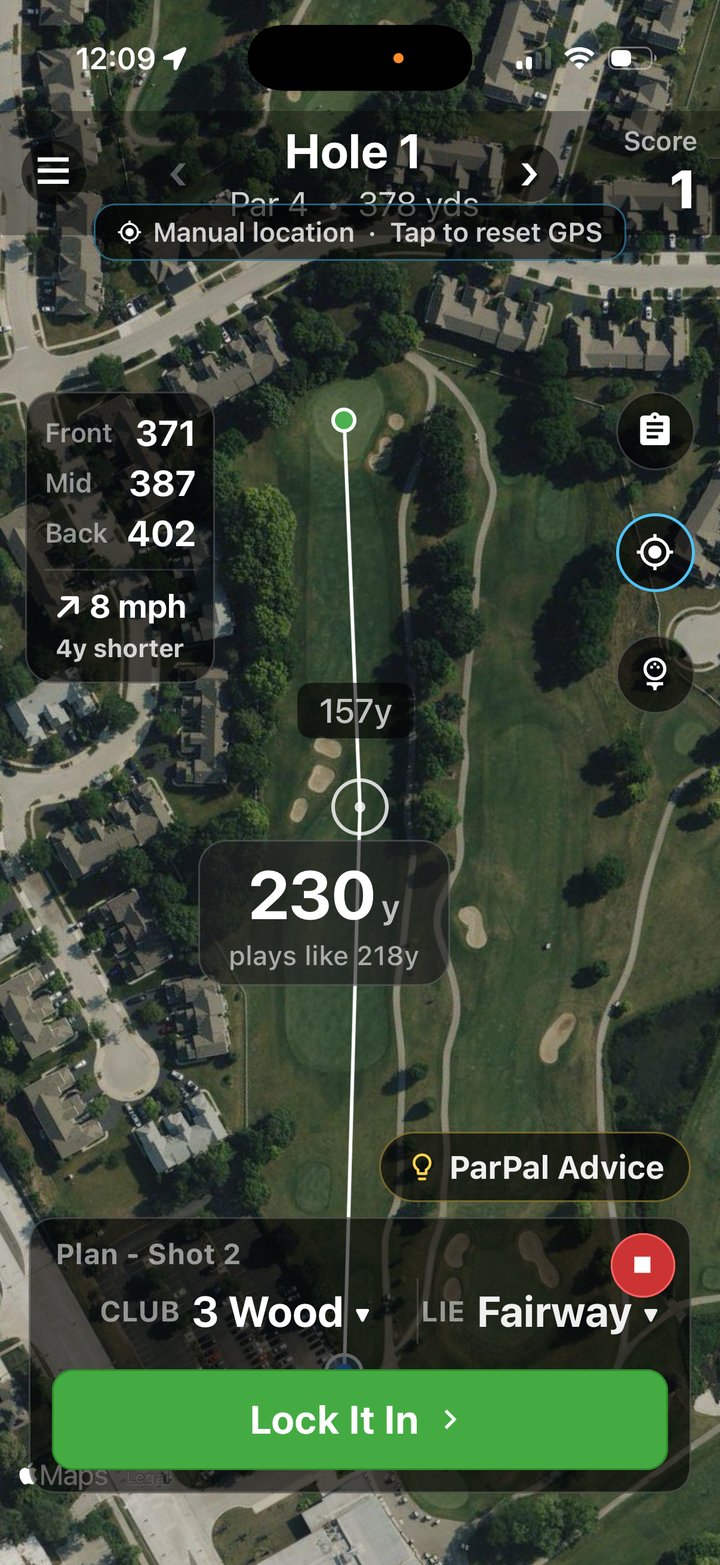
Before the shot
The player checks club and lie, taps the mic, and says the plan out loud, about six seconds. Lock It In seals it to that shot before the swing, so it can’t be revised after they see where the ball went.
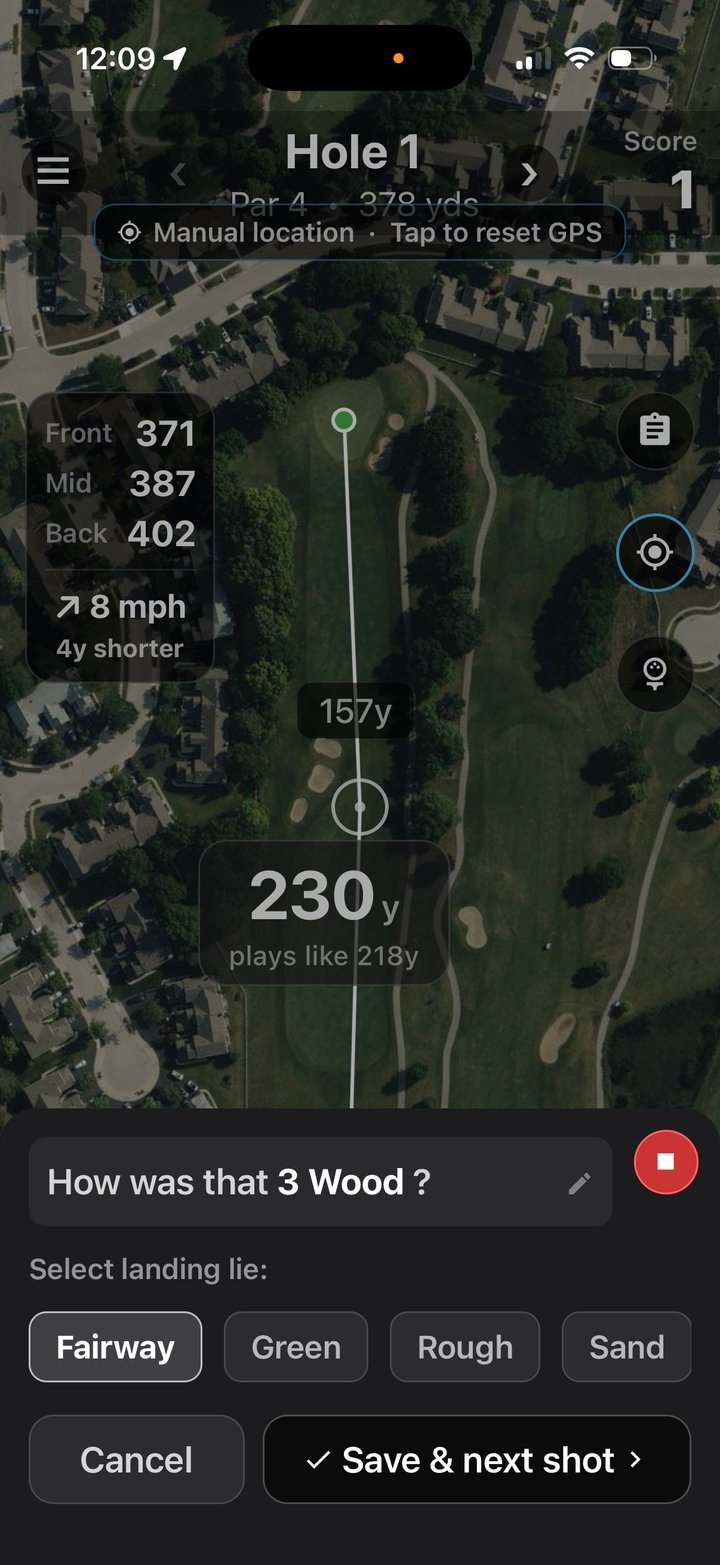
After the shot
The record sheet opens on its own with the mic already running. The player talks while they walk, taps where the ball ended up, and saves. One button sets up the next shot.
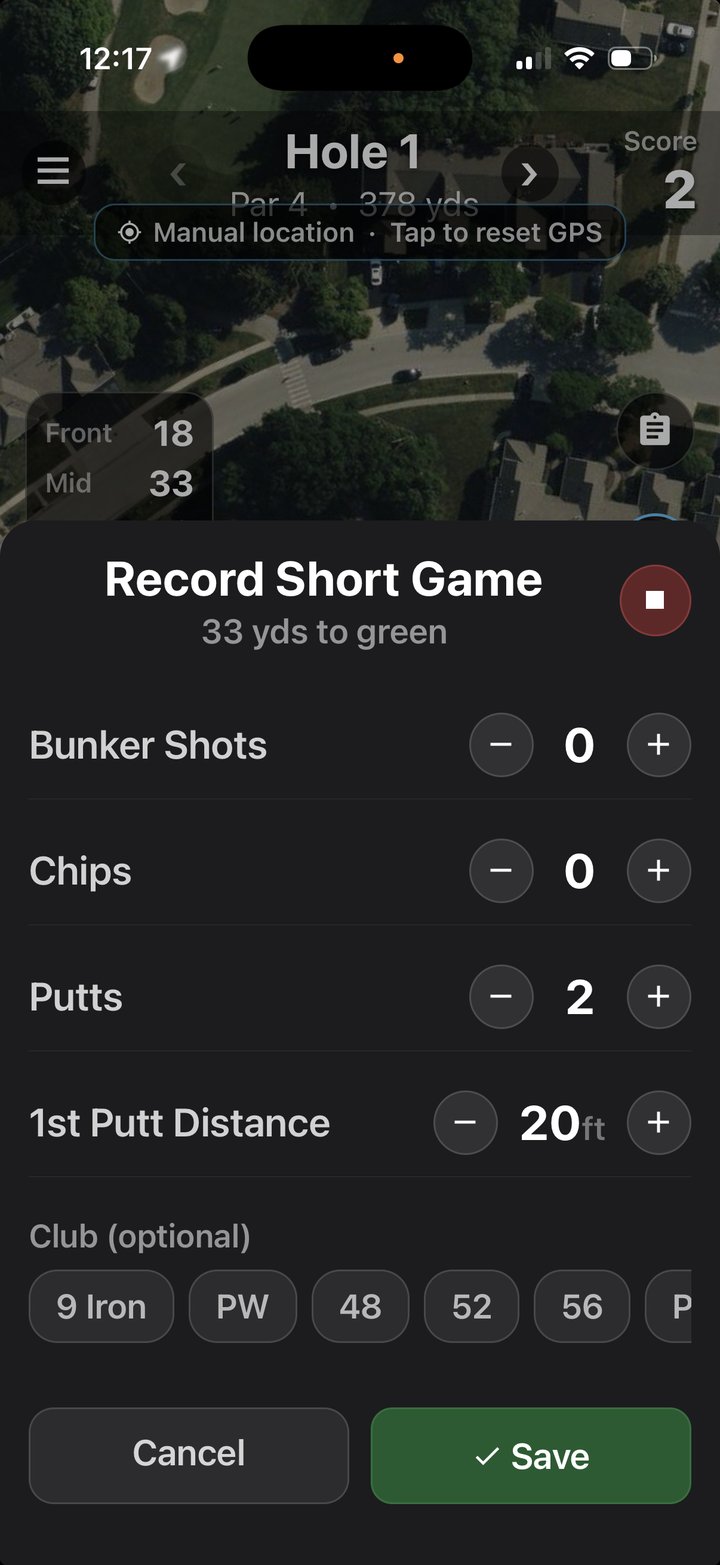
Near the green
Inside 40 yards the screen changes by itself. No shot plans for a two-foot tap-in. Bunker shots, chips, putts, and first-putt distance. Counters, not forms, with the mic right there.
Pre Swing Thought
“Not going for it. Three wood to about 230, leaves me a full 8 iron from 157 instead of a half swing. I’d rather have the number I practice.”
Outcome Capture
“Caught it a touch heavy, came up short right. Short-sided myself, which is what I was trying to avoid.”
That’s not a swing conversation. That’s a commitment conversation.
Voice, not forms
There’s no dropdown for “strategy.” Players talk, and the transcription is tuned for golf vocabulary. A reflection tool nobody uses past hole 4 is worth nothing, which is why the loop is six seconds, not a survey.
Locked before the outcome
The plan is sealed the moment they lock it in, before the swing, with no way to revise it once they see the result. A thought never voiced gets quietly rewritten; one spoken before the swing can’t be.
Thirty seconds beats the drive home
A player who reflects half a minute after the shot tells you something true. A player who reflects in the parking lot tells you a story that already accounts for how the round went.
Ready when you are
Your school page is already up
Every Chicagoland golf program has a page and a claim code waiting. Find yours to claim your team, or to see what your players and parents would see.
Find your schoolRather talk it through first?
Leave your info and we'll reach out. No code needed.
What it takes to run it
No sensors, no club tags, nothing to buy. It’s the phone they already carry.
- 12 minutes
Claim your team
Your school already has a page and a claim code. Sign in, enter the code, and your team is live. You’re the head coach, and the same code is what your players use to join.
- 2One session
Players log their yardages once
Each player enters club distances during onboarding. That drives the suggested club on every plan card, so it’s worth doing honestly.
- 3Per round
Put a practice round on the calendar
Team scoring reads from rounds attached to a team event. Start the event, players join from their phones, and every tracked shot is stored for review.
- 4Your call
Start with two or three players
Pro tracking is more work than tapping in a score. Start with the players who’ll do it well, let the rest run Basic, and let it spread on its own.
Frequently Asked Questions
- Is this legal for high school golf?
- USGA Rule 4.3a restricts advice, not distance. When you create a Match or Tournament event in ParPal, on-course advice is switched off by default for everyone in it. Still worth checking your state association and event rules. Practice rounds and qualifying are the easy place to start, and that’s where the coaching value lives anyway.
- What does it cost?
- It’s free for our first partner programs this season, while we work closely with a small number of teams and learn from them. There’s no hardware either: no sensors and no club tags, your players simply use the phone they carry already. We’ll talk pricing for future seasons directly with you, and you’ll know well before anything changes.
- Do all my players have to track every shot?
- No. Basic and Pro coexist in the same round. A freshman can tap in scores while your #1 tracks every shot, and any player can switch modes mid-round from the scorecard.
- Who can see my players’ data?
- You see data only for players who accept your team invite. Rosters and individual stats are never published publicly. Parents and fans you approve see scores and highlights, not strategy.
- Does it work for teaching professionals?
- Yes. The same team setup works for coaching groups and academies. Each student joins with your code and you see their tracked rounds in one place.
Let’s run it for one practice round.
Two or three players, one nine, Pro mode on. If what your players say about their own shots doesn’t tell you something you didn’t already know about your team, it isn’t worth their time or yours.