Fix Your Hook - Rick Shiels
Rick Shiels
PGA Professional, 2.5M+ YouTube Subscribers
Fix Your Hook - Rick Shiels' Complete Guide
Hooking the ball—curving from right to left (for right-handed golfers)—can be just as frustrating as slicing. Rick Shiels, PGA Professional, breaks down the hook in simple terms and provides clear solutions.
Unlike a slice, a hook often comes from overcorrecting or having too strong a grip. Understanding the causes helps you fix it effectively.
You'll learn:
- Why you hook the ball
- Step-by-step fixes
- Practice drills
- Common mistakes
Let's straighten out your ball flight.

What Causes a Golf Hook?
A hook occurs when the ball curves from right to left (for right-handed golfers) due to counterclockwise spin. This happens when your clubface is closed relative to your swing path.
The Main Causes:
- Too strong a grip - Hands rotated too far right, making it easy to close the face
- Inside-out swing path with closed face - Path is good, but face is too closed
- Overcorrecting from a slice - Trying to fix a slice by going too far the other way
Why It Matters:
A hook costs you accuracy and can be harder to control than a slice. Fixing it helps you hit straighter, more predictable shots.
Key Takeaways from Rick Shiels' Method
Rick's approach focuses on:
- Balance is key - Don't overcorrect. Find the middle ground.
- Grip adjustment - Often the simplest fix
- Path control - Make sure your path isn't too far inside-out
- Practice with purpose - Quality over quantity
Rick Shiels
PGA Professional, 2.5M+ YouTube Subscribers
Step-by-Step Breakdown
Step 1: Adjust Your Grip
What to do:
- Weaken your grip slightly—rotate your hands to the left
- You should see 2-3 knuckles on your left hand (not 4-5)
- Your right hand should be more on top, less underneath
- Both "V's" should point more toward your chin
Why it works: A weaker grip makes it harder to close the clubface too much. You'll square it more naturally.
Common mistake: Going too weak and creating a slice. Find the middle ground.
Step 2: Check Your Swing Path
What to do:
- Make sure your path isn't too far inside-out
- Your path should be slightly inside-out, not dramatically
- Use alignment sticks to check your path
- Feel like you're swinging more down the line
Why it works: A path that's too inside-out with a closed face creates a hook. A more neutral path helps.
Common mistake: Thinking you need an extreme inside-out path. Slightly inside-out is enough.
Step 3: Square the Clubface
What to do:
- Let your body rotation square the face naturally
- Don't actively try to close the face with your hands
- Feel your hands ahead of the clubhead at impact
- Let the club release naturally
Why it works: Body rotation squares the face. Hand manipulation closes it too much.
Common mistake: Trying to help the ball with your hands, which closes the face too much.
Step 4: Practice with Feedback
What to do:
- Use alignment sticks to see your path
- Record your swing to check your clubface angle
- Hit balls and watch the ball flight
- Adjust based on feedback
Why it works: Feedback accelerates learning. You can't fix what you can't see.
Common mistake: Practicing without feedback. You need to see what you're doing.
Take This Tip to the Course — Free
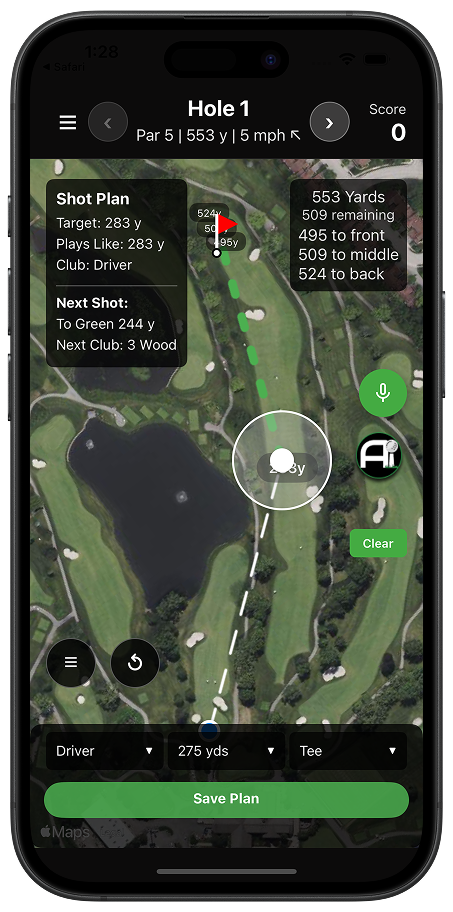
ParPal's AI caddie tells you when to use this technique and tracks whether it's actually lowering your scores. Download it now and it's working for you on your very next round.
Get ParPal FreeFree · iPhone & Android · Set up in about 30 seconds
Drills to Practice This Technique
Drill 1: Grip Adjustment Drill
Equipment: Your 7-iron
How to do it:
- Take your normal grip
- Weaken it slightly—rotate hands to the left
- Make swings focusing on letting the face square naturally
- Don't try to close it with your hands
Reps: 20-30 swings
Success marker: The ball goes straighter, not hooking as much.
Drill 2: Path Control Drill
Equipment: Alignment sticks, your driver
How to do it:
- Place alignment sticks to create a path slightly inside-out
- Practice swinging down this path
- Focus on not going too far inside-out
- Feel like you're swinging more down the line
Reps: 20-30 swings
Success marker: Your path is slightly inside-out, not dramatically.
Drill 3: Impact Position Drill
Equipment: Impact bag, your driver
How to do it:
- Set up to the impact bag
- Focus on hitting with your hands ahead
- Let the face square naturally, don't close it
- Feel your body rotation squaring the face
Reps: 20-30 swings
Success marker: You feel the face squaring naturally. The bag moves forward.
Common Mistakes When Trying This Fix
-
Overcorrecting - Going from too strong to too weak. Find the middle ground.
-
Trying to fix with your hands - Don't manipulate the clubface. Let your body do it.
-
Not checking your path - Your path might be too inside-out. Check it.
-
Giving up too soon - Change takes time. Be patient and consistent.
-
Ignoring feedback - You need to see what you're doing. Use video and alignment sticks.
Troubleshooting:
- Still hooking? Check your grip first—it's usually too strong.
- Slicing now? Your grip might be too weak. Find the middle ground.
- Inconsistent? Focus on one thing at a time. Master it before moving on.
30 Seconds to Better Golf
Download ParPal, open it on the tee, and get GPS yardages, wind-adjusted distances, and the smart club call—before your first swing.
Get ParPal FreeFree · iPhone & Android · Set up in about 30 seconds
Frequently Asked Questions
How long does it take to fix a hook?
Most golfers see improvement within 2-3 weeks of consistent practice. Completely fixing a hook typically takes 3-4 weeks. The key is finding the right balance.
Is a hook better than a slice?
Neither is ideal, but a hook can be more predictable than a slice. However, both cost you accuracy. The goal is to hit the ball straight.
Should I weaken my grip?
Yes, but don't go too far. Weaken it slightly—from seeing 4-5 knuckles to 2-3. Find the middle ground.
What if I'm hooking after trying to fix my slice?
You've likely overcorrected. Dial back your grip and path. Find the middle ground between slice and hook.
Summary: Your Action Plan
Fixing a hook requires balance:
The Key Points:
- Weaken your grip slightly (2-3 knuckles, not 4-5)
- Check your path—don't go too far inside-out
- Let your body square the face naturally
- Practice with feedback
Your Practice Plan:
- Week 1: Adjust your grip. Use the grip adjustment drill.
- Week 2: Check your path. Use alignment sticks.
- Week 3: Work on impact position. Use impact bag.
- Week 4: Combine everything. Hit balls with feedback.
Remember: Balance is key. Don't overcorrect. Find the middle ground and practice with purpose.
The hook doesn't have to ruin your game. Start with your grip today, and commit to consistent practice. You've got this.
Related Videos
Continue learning with these related golf instruction videos
Track Your Progress
See how fixing your hook improves your game. ParPal tracks your shots and helps you identify what's working.
Get ParPal FreeFree · iPhone & Android · Set up in about 30 seconds