How to Fix Your Slice - Hank Haney
Hank Haney
Former Tiger Woods Coach, Golf Digest Top 50 Instructor
How to Fix Your Golf Slice: Hank Haney's Proven Method
Are you tired of watching your golf ball curve dramatically to the right (or left if you're left-handed)? You're not alone. The golf slice is one of the most frustrating problems golfers face, affecting players at every skill level—from beginners to low handicappers.
In this comprehensive guide, we'll break down Hank Haney's proven method for fixing your slice. As the former coach of Tiger Woods and one of Golf Digest's Top 50 Instructors, Hank Haney has helped thousands of golfers eliminate their slice and hit straighter, more powerful drives.
By the end of this post, you'll understand:
- The root causes of a slice (it's not always what you think)
- Step-by-step instructions to fix your swing
- Practice drills to ingrain the correct technique
- Common mistakes to avoid
Let's dive in and get you hitting straighter shots.

What Causes a Golf Slice?
Understanding the root cause of your slice is the first step to fixing it permanently. Many golfers think a slice is just about an open clubface, but it's actually more complex.
The Physics Behind a Slice
A slice occurs when the ball curves from left to right (for right-handed golfers) due to sidespin. This happens when:
- Clubface is open relative to swing path - The clubface points right of where your swing path is going
- Outside-in swing path - You're coming over the top, cutting across the ball
- Weak grip - Your hands are rotated too far to the left, making it hard to square the clubface
Why This Matters
A slice doesn't just look bad—it costs you distance and accuracy. When the ball curves, you lose:
- 20-30 yards of distance on average
- Accuracy as the ball lands unpredictably
- Confidence as you can't trust your swing
Common Misconceptions
Many golfers believe:
- "I just need to swing harder" - Actually makes it worse
- "I need to aim left" - This is a band-aid, not a fix
- "It's my equipment" - While equipment can help, technique is 90% of the solution
The truth? A slice is almost always a swing path and clubface control issue, both of which are fixable with the right approach.
Key Takeaways from Hank Haney's Method
Here are the most important points from Hank Haney's instruction:
- Fix your grip first - A proper grip is the foundation. Hank emphasizes a neutral to strong grip position
- Swing from the inside - The path must come from inside-out, not outside-in
- Square the clubface at impact - This requires proper wrist position and timing
- Practice with alignment sticks - Visual feedback is crucial for ingraining the correct path
- Start with shorter clubs - Master the technique with irons before moving to driver
These fundamentals work together. You can't fix one without addressing the others.
Hank Haney
Former Tiger Woods Coach, Golf Digest Top 50 Instructor
Step-by-Step Breakdown
Follow these steps in order. Don't skip ahead—each builds on the previous one.
Step 1: Check Your Grip
What to do:
- Place the club in your left hand (for right-handed golfers)
- The grip should run diagonally across your palm, from the base of your pinky to the middle joint of your index finger
- Your left thumb should sit slightly to the right of center on the grip
- Place your right hand so the "V" formed by your thumb and index finger points toward your right shoulder
What it should feel like:
- Your hands should feel connected, not fighting each other
- You should feel like you can rotate your forearms through impact
- The club should feel secure but not tight
What it should look like:
- From address, you should see 2-3 knuckles on your left hand
- Your right hand should cover your left thumb
- Both "V's" should point between your chin and right shoulder
Step 2: Set Up for an Inside-Out Path
What to do:
- Stand with your feet, hips, and shoulders aligned parallel to your target line
- Position the ball slightly forward in your stance (just inside your left heel for driver)
- Shift your weight slightly to your right side (60/40)
- Feel like your right shoulder is slightly lower than your left
What it should feel like:
- You should feel like you're set up to swing around your body, not across it
- Your body should feel coiled and ready to rotate
- You should feel balanced and athletic
What it should look like:
- Your spine should tilt slightly away from the target
- Your shoulders should be slightly closed to the target line
- The ball position should allow you to hit up on it (for driver)
Step 3: Take the Club Back on the Inside
What to do:
- Start your backswing by turning your shoulders, not lifting your arms
- Keep your left arm relatively straight (not rigid)
- Let your wrists hinge naturally as the club reaches parallel
- Feel like you're coiling your body, not just swinging your arms
What it should feel like:
- You should feel your weight shift to your right side
- Your left shoulder should turn under your chin
- You should feel tension in your core and right side
What it should look like:
- The club should stay on plane (not too steep, not too flat)
- Your left arm should stay connected to your chest
- Your right elbow should stay relatively close to your body
Step 4: Transition and Downswing
What to do:
- Start your downswing with your lower body (hips and legs)
- Let your arms follow, not lead
- Keep your right elbow close to your body
- Feel like you're swinging from inside-out, not outside-in
What it should feel like:
- You should feel like your hips are clearing before your arms come through
- Your right elbow should feel like it's staying close to your right hip
- You should feel like you're swinging around your body, not across it
What it should look like:
- Your swing path should approach the ball from inside the target line
- Your clubface should be square to the path (not open)
- Your body should be rotating, not sliding
Step 5: Impact and Follow-Through
What to do:
- At impact, your weight should be shifting to your left side
- Your hips should be open to the target
- Your clubface should be square to your swing path
- Continue rotating through the ball
What it should feel like:
- You should feel like you're hitting the ball with your body, not just your arms
- The club should feel like it's releasing naturally
- You should feel balanced and in control
What it should look like:
- Your belt buckle should be facing the target at impact
- Your right shoulder should be lower than your left
- Your follow-through should be high and around your body
Take This Tip to the Course — Free
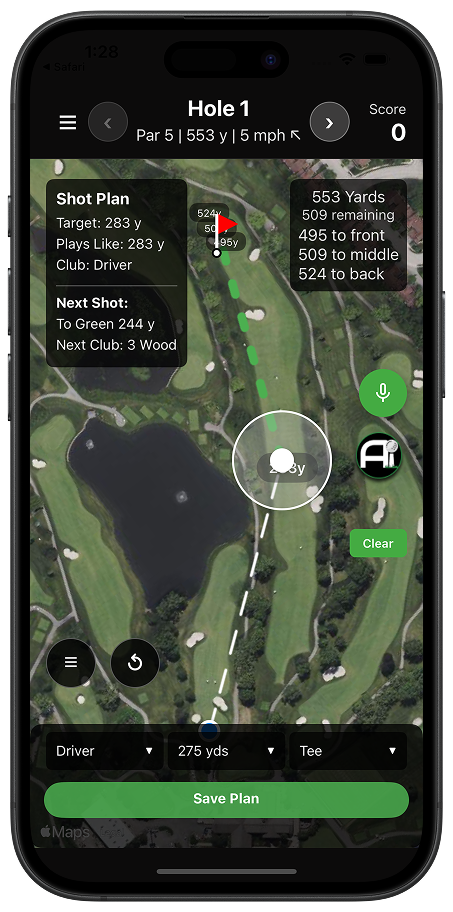
ParPal's AI caddie tells you when to use this technique and tracks whether it's actually lowering your scores. Download it now and it's working for you on your very next round.
Get ParPal FreeFree · iPhone & Android · Set up in about 30 seconds
Drills to Practice This Technique
Practice makes permanent—but only if you practice correctly. Here are drills to ingrain the correct swing path and clubface control.
Drill 1: Alignment Stick Path Drill
Equipment needed:
- 2 alignment sticks or golf clubs
- Your driver or 7-iron
How to do it:
- Place one alignment stick on the ground parallel to your target line
- Place a second stick 6-8 inches inside the first (closer to you)
- Set up with the ball between the two sticks
- Practice swinging so your clubhead stays between the sticks on the downswing
Reps: 20-30 swings without a ball, then 10-15 with a ball
Success markers:
- Your clubhead stays between the sticks
- You feel like you're swinging from inside-out
- The ball starts right of target and curves back (draw) or goes straight
Drill 2: Impact Bag Drill
Equipment needed:
- Impact bag or heavy pillow
- Your driver
How to do it:
- Set up as if you're hitting a ball
- Swing and hit the impact bag at the bottom of your swing
- Focus on feeling your hands ahead of the clubhead at impact
- Feel your body rotating through impact
Reps: 20-30 swings
Success markers:
- You feel your hands leading the clubhead
- Your body rotates through impact
- The bag moves forward, not to the right
Drill 3: Slow Motion Swings
Equipment needed:
- Your driver
- Mirror (optional)
How to do it:
- Take your normal setup
- Swing in slow motion, focusing on each position
- Check that your club stays on plane
- Feel the correct sequence: body turn, then arms, then release
Reps: 10-15 slow swings, then 5-10 at 50% speed
Success markers:
- You can feel each position in the swing
- Your swing feels smooth and connected
- You maintain balance throughout
Practice Schedule:
- Week 1: Focus on grip and setup (Drill 3)
- Week 2: Add path work (Drill 1)
- Week 3: Add impact position (Drill 2)
- Week 4: Combine all drills and hit balls
Common Mistakes When Trying This Fix
Even with the right instruction, it's easy to fall into these traps. Here's what to watch out for:
-
Overcorrecting the grip - Going from too weak to too strong creates a hook. Find the middle ground—a neutral to slightly strong grip.
-
Swinging too hard - Trying to fix your slice by swinging harder usually makes it worse. Focus on technique first, then add speed.
-
Not practicing enough - You can't fix a slice in one range session. Commit to 2-3 practice sessions per week for at least a month.
-
Ignoring your setup - A poor setup makes it nearly impossible to swing correctly. Spend time on your grip, stance, and alignment before every swing.
-
Giving up too soon - Change takes time. You might hit some bad shots while learning. Stick with it—the results are worth it.
Troubleshooting:
- If you're still slicing: Check your grip first, then your swing path
- If you're hooking: Your grip might be too strong, or you're swinging too far from inside
- If you're hitting it straight but short: Focus on generating more clubhead speed through proper rotation
30 Seconds to Better Golf
Download ParPal, open it on the tee, and get GPS yardages, wind-adjusted distances, and the smart club call—before your first swing.
Get ParPal FreeFree · iPhone & Android · Set up in about 30 seconds
Frequently Asked Questions
How long does it take to fix a slice?
Most golfers see improvement within 2-3 weeks of consistent practice. However, completely eliminating a slice typically takes 4-6 weeks of dedicated practice. The key is consistency—practice 2-3 times per week, focusing on the fundamentals.
Can I fix my slice without lessons?
Yes, many golfers fix their slice using online instruction (like this guide) and focused practice. However, if you're struggling after 4-6 weeks, consider a lesson with a PGA professional for personalized feedback.
Will changing my equipment fix my slice?
Equipment can help (like a driver with more draw bias), but it won't fix a fundamental swing flaw. Focus on technique first. Once your swing is correct, then consider equipment adjustments.
Should I practice with my driver or irons first?
Start with your 7-iron or 8-iron. These clubs are easier to control and will help you feel the correct swing path. Once you're comfortable, gradually work your way up to your driver.
What if I'm still slicing after trying these fixes?
If you're still slicing after 4-6 weeks of practice:
- Double-check your grip—this is the most common issue
- Record your swing and compare it to the instruction
- Consider a lesson with a PGA professional
- Make sure you're practicing correctly, not just hitting balls
Can a slice be caused by my stance or alignment?
Yes! Poor alignment can make it nearly impossible to swing correctly. Make sure your feet, hips, and shoulders are aligned parallel to your target line. Many golfers aim right to compensate for their slice, which only makes it worse.
Summary: Your Action Plan
Fixing your slice is achievable with the right approach and consistent practice. Here's what you've learned:
The Fundamentals:
- A proper grip is the foundation
- An inside-out swing path is essential
- Body rotation, not arm swing, generates power
Your 4-Week Plan:
- Week 1: Master your grip and setup. Practice without hitting balls.
- Week 2: Focus on swing path. Use alignment sticks and slow-motion swings.
- Week 3: Work on impact position. Use the impact bag drill.
- Week 4: Combine everything. Hit balls with focus on technique, not distance.
Remember: Change takes time. You'll hit some bad shots while learning—that's normal. Stick with it, and you'll be hitting straighter, more powerful drives in no time.
The slice that's been frustrating you for months can be fixed. Start with your grip today, and commit to consistent practice. You've got this.
Related Videos
Continue learning with these related golf instruction videos
Ready to Transform Your Golf Game?
Join thousands of golfers using ParPal to track their progress, get personalized coaching, and lower their scores. Start your free trial today.
Get ParPal FreeFree · iPhone & Android · Set up in about 30 seconds